A distributor’s first door range should be built from the customers and projects it can actually serve, not from a claim that one assortment fits every buyer in Nigeria. Start with interviews, project requests and sample feedback. Then choose a manageable set of door types, finishes and lock options that can be explained, quoted and supported consistently.
Start with customer and project evidence
Separate the enquiries you receive into practical groups: replacement purchases, new residential buildings, hospitality, commercial work and public-sector projects. These are planning categories, not assumptions about how large each segment is. For each recent request, record:
- Buyer type, destination city or region, project stage and intended application.
- Door type requested, approximate quantity, finish, hardware and any stated performance requirement.
- The information the buyer supplied, the questions that delayed a quotation and the reason a sample or alternative was requested.
- Whether the opportunity progressed, paused or was lost, using a short reason rather than an unsupported estimate of future demand.
Review this evidence periodically with sales and installation partners. A small number of repeated, well-documented requests is more useful for a first assortment decision than a broad market statement.
Create a range matrix before choosing models
Use a matrix with one row per proposed configuration and columns for customer segment, door construction, opening type, finish, hardware, lock preparation, options, sample status, supplier lead-time confirmation and after-sales documentation. Keep the number of variants controlled: a different finish, frame, lock preparation or handing can create a separate configuration that needs its own price and product information.
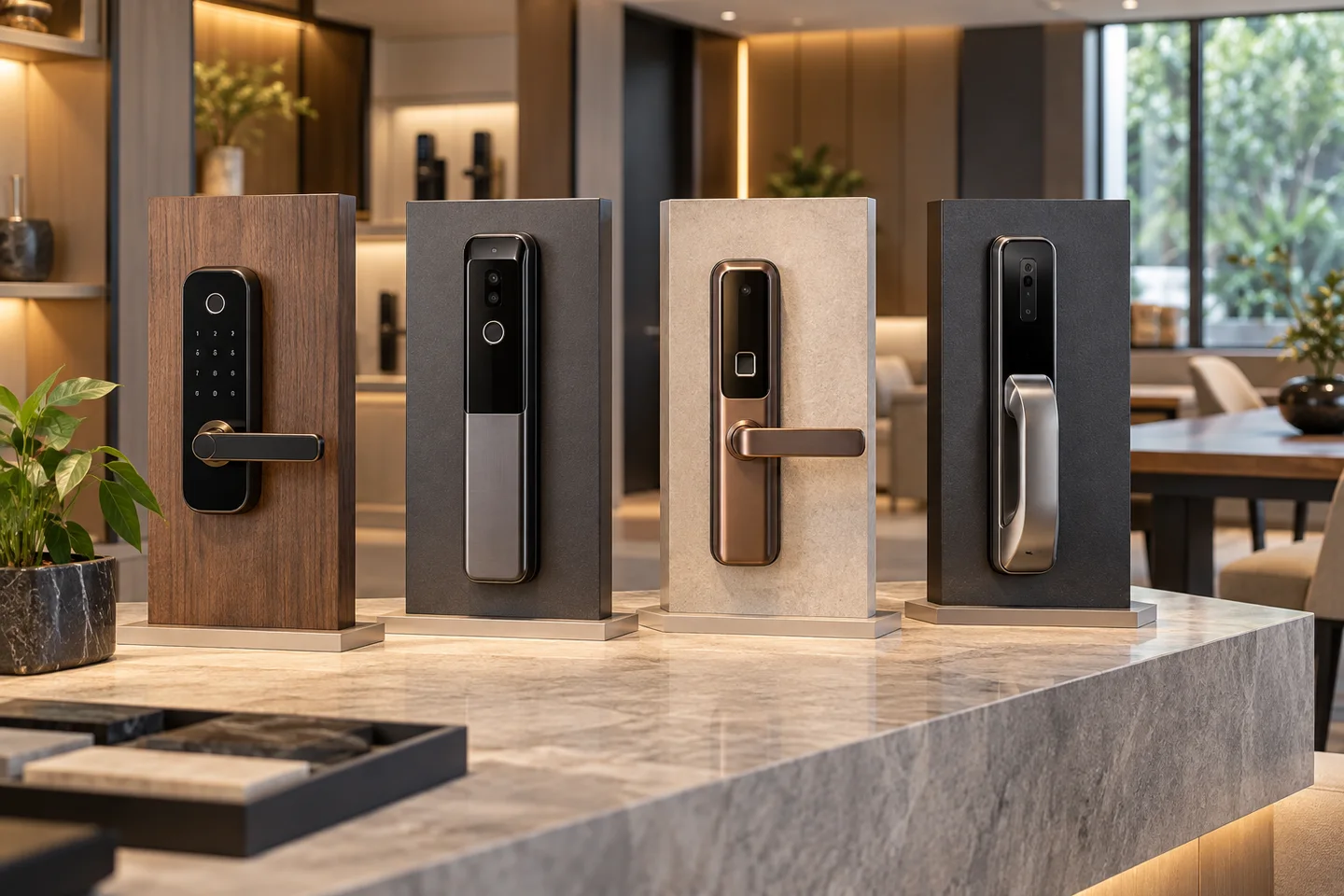
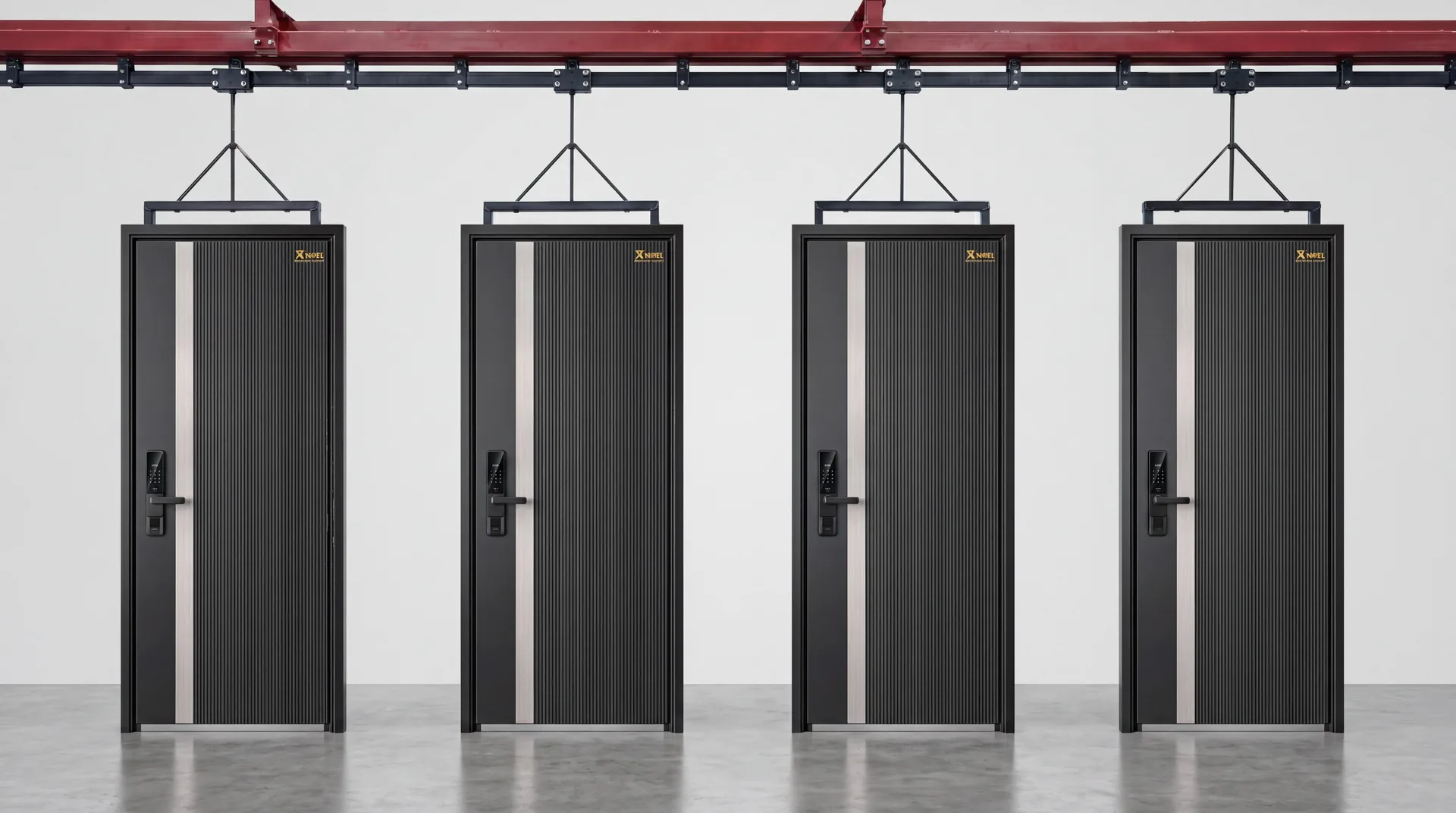
Consider a balanced range across the products your team is prepared to explain and support. For example, compare steel entry doors, wood-finish options and smart-door or smart-lock combinations as distinct offers rather than presenting them as interchangeable. The security-door project selection guide can help frame application questions; the smart-lock range checklist covers compatibility and support decisions.
Use samples to answer a specific question
Do not request samples simply to fill a showroom. Define the decision each sample should support: finish and colour, surface feel, operation, hardware placement, packaging condition or customer reaction. Label each sample with model, finish, configuration, date and review owner. Capture feedback in a consistent form:
- What did the reviewer compare it with?
- Which feature mattered to the decision?
- What needs clarification or adjustment before a larger order?
- Is the next step a revised sample, a technical review or a quotation?
Treat one person’s preference as feedback, not proof that the same choice represents an entire country or customer segment.
Plan inventory and replenishment from real turnover
For each variant, define whether it is a stocked item, a sample, a project order or a made-to-order option. Set reorder points only after the business has usable sales and supply data. Track order date, promised dispatch, arrival, damaged or incomplete items, time to sell and repeat demand. Review slow-moving variants and parts compatibility before adding more models.
Ask suppliers to confirm, for the exact selected configuration, what can be stocked, what is made to order, which components are interchangeable and how changes affect price or timing. Do not describe an unconfirmed lead time as a standing guarantee.
Make the supplier and support checklist operational
Before adding a product, record who supplies installation instructions, warranty terms, spare parts, lock programming guidance and escalation support. If a smart lock is part of the offer, confirm the actual door preparation, power arrangement, credential setup, local installation responsibilities and the process for a reset or service issue. The smart-lock product page can be used to identify the product information needed for a focused enquiry.
A practical launch checklist
- Identify two or three customer groups from recent enquiries and project evidence.
- Choose a limited set of clearly differentiated configurations for review.
- Record specification, finish, hardware, lock preparation and packaging for each model.
- Obtain sample and pricing feedback against the same written checklist.
- Confirm stock or made-to-order status, documentation and service responsibilities.
- Review actual enquiries and turnover before expanding the assortment.
Send a distributor brief
Share the intended customer groups, product mix, sample requirements, destination, expected purchasing process and support questions through the WONLY contact page. A focused discussion can clarify which door and lock configurations merit review; final availability, compatibility and commercial terms must be confirmed for the selected models.